Tsuchinoko - Japan’s Hidden Cryptid
Japan is a land where folklore breathes quietly beneath the surface of everyday life—where ancient mountains, dense forests, and rural legends still hold their secrets. Among these mysteries slithers one of the country’s most enduring and elusive cryptids: the Tsuchinoko. Often described as a short, snake-like creature with a distinctly round, almost inflated midsection, the Tsuchinoko has fascinated believers, skeptics, and storytellers for generations.
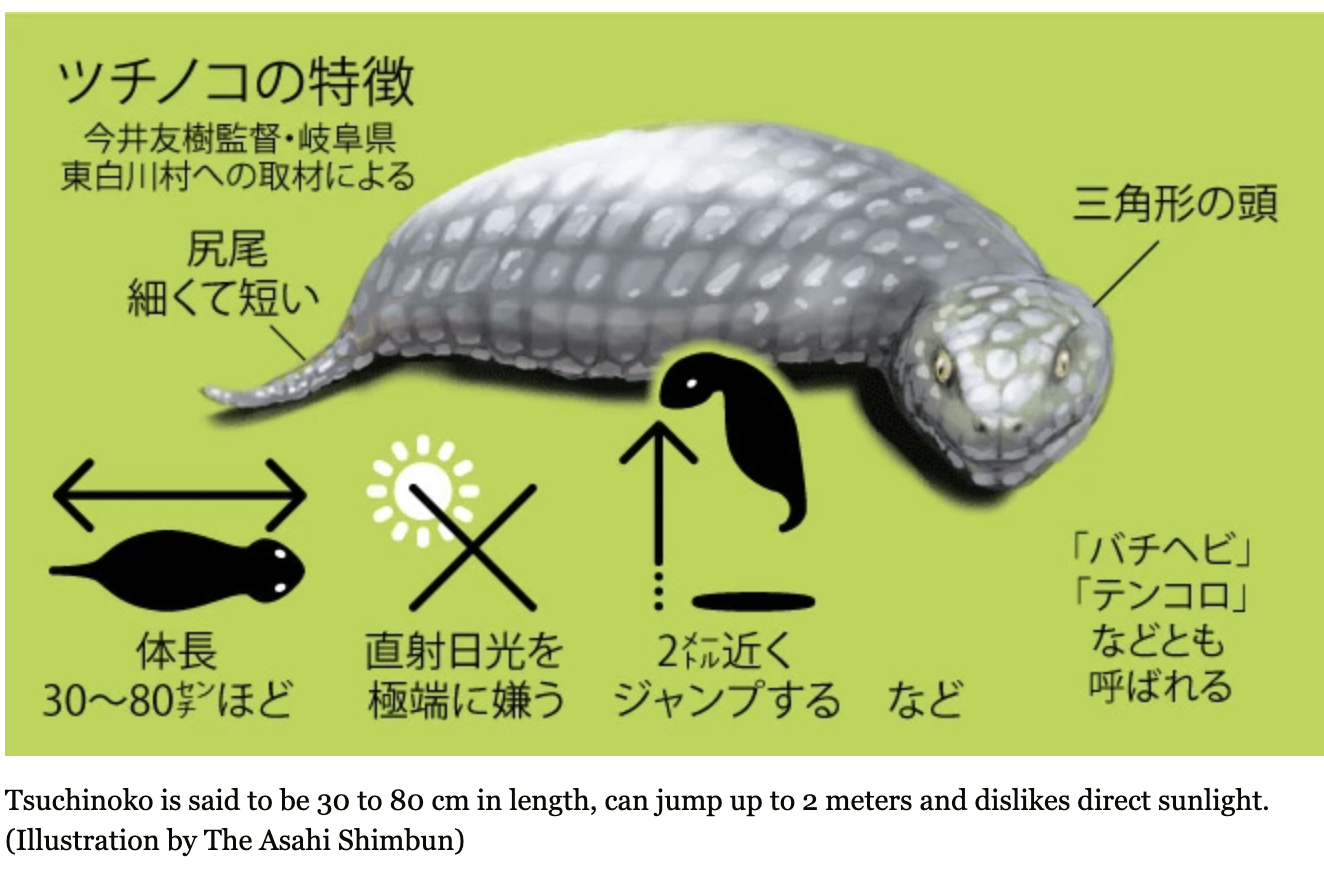
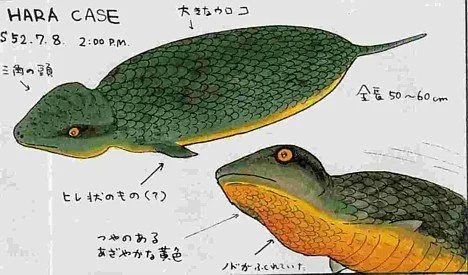
Unlike more globally recognized cryptids, the Tsuchinoko feels deeply rooted in the rural heart of Japan. Sightings are most often reported in remote mountainous regions, where thick undergrowth and limited human presence create the perfect conditions for something to remain hidden. Witnesses commonly describe it as anywhere from 30 to 80 centimeters long, with a body that bulges in the middle and tapers at both ends—giving it a silhouette unlike that of any known snake. Some accounts even claim it can leap impressive distances or emit strange sounds, adding to its mystique.
But what makes the Tsuchinoko particularly compelling is how it exists at the intersection of folklore and modern curiosity. Stories of the creature date back centuries, appearing in regional tales passed down through generations. Yet, unlike many traditional yokai or spirits, the Tsuchinoko is often treated less like a supernatural being and more like an undiscovered animal—a biological mystery waiting to be solved. This has led to numerous searches, bounty offers from local towns, and even organized expeditions hoping to finally confirm its existence.
In some rural communities, the Tsuchinoko has become more than just a legend—it’s a symbol. Towns have embraced the mystery, using it to attract tourism and celebrate local identity. Festivals, merchandise, and themed attractions keep the legend alive, blurring the line between belief and cultural storytelling. Whether or not anyone truly expects to find the creature, the hunt itself has become part of the tradition.
Skeptics, of course, offer more grounded explanations. Misidentified snakes, optical illusions, or even exaggerated storytelling could easily account for many sightings. Japan is home to several snake species, and a glimpse of one at an odd angle—or in motion—could create the impression of something unusual. Still, these explanations don’t fully diminish the allure. In fact, they often add to it, fueling debates and keeping the legend in the public imagination.
There’s also something universally human about the Tsuchinoko. Much like Bigfoot in North America or the Loch Ness Monster in Scotland, it suggests that the world still holds hidden wonders. In an age of satellite imagery and constant connectivity, the idea that something unknown could still exist just beyond our reach is both comforting and thrilling.
For listeners of Supernatural Japan, the Tsuchinoko is more than just a cryptid—it’s a doorway into the broader cultural landscape of Japan. It reflects how folklore evolves, how communities preserve mystery, and how belief can persist even in the face of modern science. Whether you approach it as a curious skeptic or a hopeful believer, the story of the Tsuchinoko invites you to look a little closer at the world around you… and to consider what might still be hiding in the shadows.
So next time you find yourself deep in the Japanese countryside, surrounded by rustling leaves and the quiet hum of nature, keep your eyes open. You never know what might be watching from just beyond the undergrowth.